When progress starts to feel boring.
Answer first: do not confuse quiet progress with failed progress. Mark the signal, protect the floor, and schedule the review before you redesign a working habit.
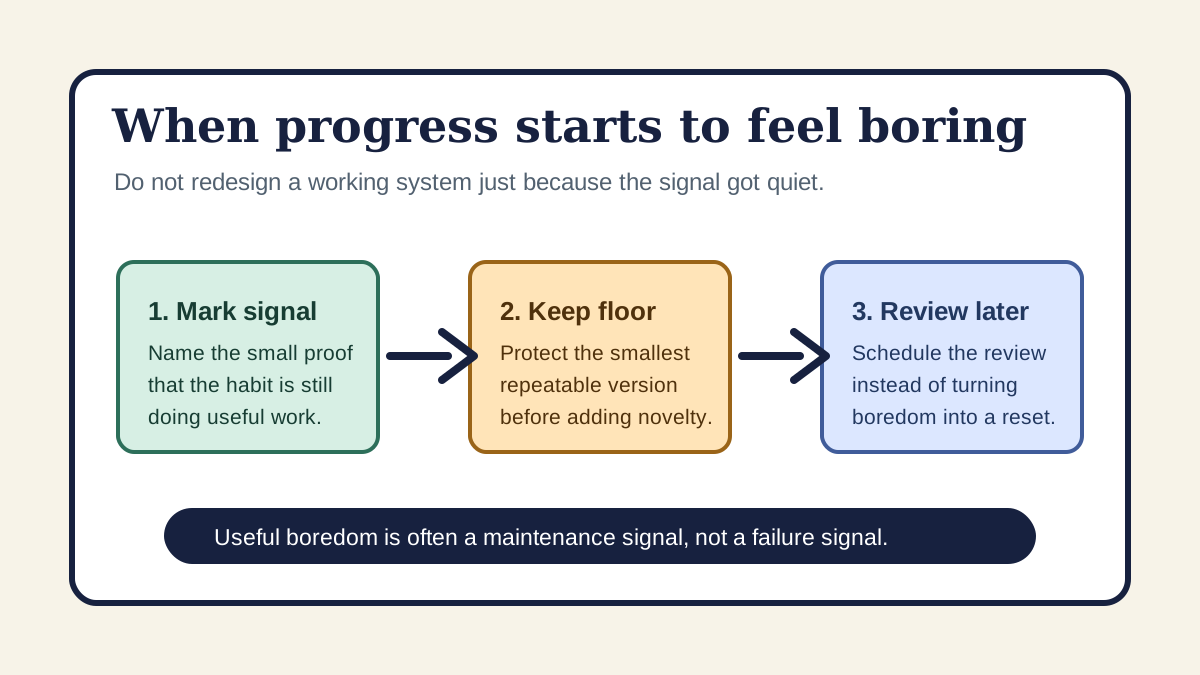
Quick answer
What should you do when progress starts to feel boring?
Treat boredom as a maintenance signal first. Mark the small proof that the system is still working, protect the minimum repeatable floor, and schedule a later review before redesigning the habit.
A working system rarely feels exciting forever. The early reward fades, the cue becomes normal, and the result stops announcing itself. That can feel like failure even when the habit is doing exactly what it was built to do.
Maintenance map
Boring progress needs evidence, not immediate novelty.
The danger is making boredom the proof that the system is broken. Before changing the plan, look for one signal, one floor, and one review point.
- Mark the signal
- Name the quiet proof that still exists: pages read, walks taken, meals prepared, drafts opened, or reviews completed.
- Protect the floor
- Keep the smallest repeatable version alive while the emotional reward is low.
- Review later
- Choose a review date before changing the habit so boredom does not become a reset trigger.
The boring-progress check.
- Ask whether the habit is failing or normalizing. A lower reward signal can mean the action is becoming part of the day.
- Keep the practice below drama level. The floor should be easy enough to repeat without needing the habit to feel meaningful every time.
- Separate review from reaction. If the routine still creates the intended proof, wait for the review before adding complexity.
Why boredom creates false redesign pressure.
Boredom is seductive because novelty feels like motion. A new app, tracker, challenge, or plan gives the system a fresh signal. But if the existing route is still producing proof, novelty may only interrupt the compounding period.
In Compounding Momentum, the useful question is not whether the habit feels exciting. It is whether the cue, environment, identity, and review loop still make the next useful action likely enough to repeat.
When the answer is yes, the boring phase is not a verdict. It is the part where the habit stops needing applause and starts becoming infrastructure.
Practical examples
Signals worth keeping when the routine feels flat.
- Writing: the draft opens on schedule even when the session feels ordinary.
- Training: the warm-up happens before the workout feels rewarding.
- Reading: the book stays visible and one page still gets finished.
- Planning: tomorrow's first action is written before shutdown.
- Recovery: the evening cue starts before the day feels complete.
Connect boredom to the right note.
If the habit needs less feedback, read when a habit needs less feedback. If the useful action has become invisible, read when a useful habit becomes invisible. If progress feels too slow to trust, read when progress feels too slow to trust.
Use this script
The maintenance-before-novelty rule.
Use this when a working route starts to feel too plain to respect.
- The quiet proof is...
- Write the smallest evidence that the habit still happened or still reduced friction.
- The floor is...
- Name the version you can keep during a low-reward week without turning the habit into a test.
- The review date is...
- Choose the moment when you will decide whether the system needs a real adjustment.
When the workbook helps.
A boring week can be handled with the maintenance-before-novelty rule. A repeated pattern of abandoning useful systems once they become ordinary needs a better review surface. The Companion Workbook helps when the habit needs visible evidence, a stable floor, and a review cadence that does not depend on excitement.
If you are still not sure whether the habit is working, start with Chapter 1 and the Seven-Layer Audit before adding a new system.
Take the smallest useful next step.
If progress feels boring, choose one route that protects the working signal before you redesign the whole routine.