When a habit needs less feedback.
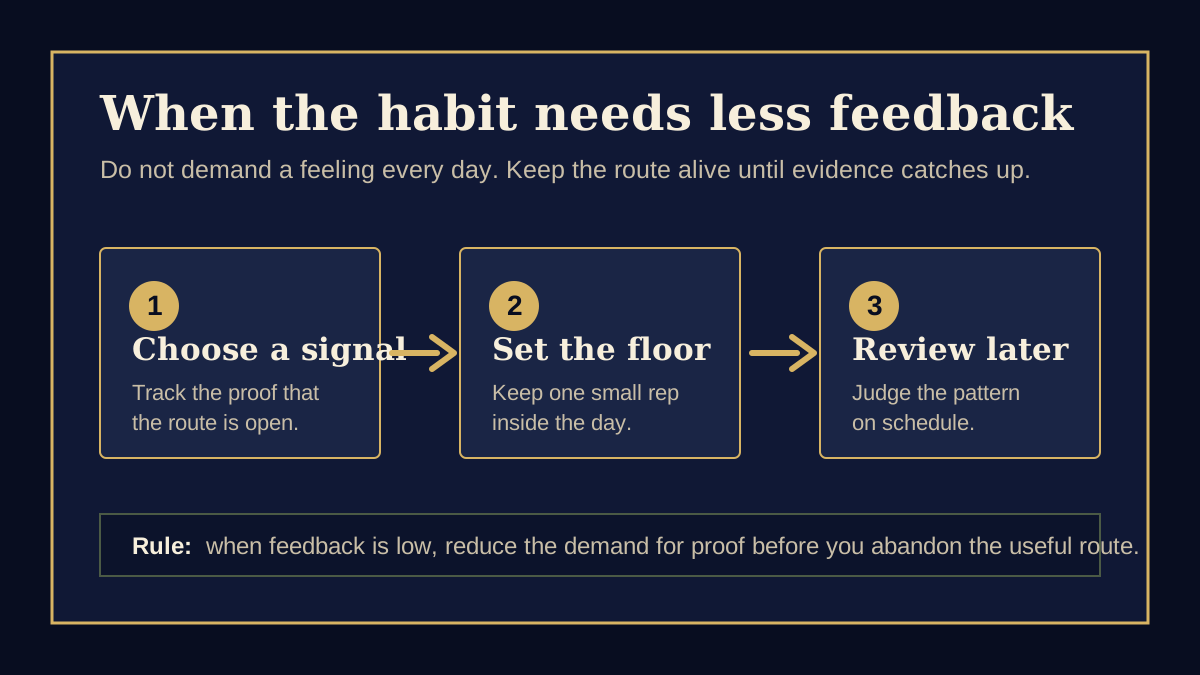
Answer first: do not demand a rewarding feeling every time the useful route is working quietly. Choose one maintenance signal, set a small floor, and review the pattern later.
Quick answer
What should you do when a habit gives you less feedback?
Choose one maintenance signal, set a small floor for the day, and review the pattern later instead of demanding a motivating feeling every time.
The goal is not to force excitement back into the habit. The goal is to keep the route open long enough for boring evidence to compound.
Maintenance mode
Low feedback is not the same as no progress.
Some useful habits stop paying you with novelty before they start paying you with results. That quiet middle is where many systems get redesigned too early.
- Choose a signal
- Track the proof that the route is still open: the start, the return, the setup, or the review.
- Set the floor
- Keep one rep small enough that a low-feedback day can still end with continuity.
- Review later
- Judge the pattern on schedule, not in the exact mood that made the habit feel unrewarding.
The low-feedback habit check.
- Name what still counts. Decide which proof is enough to keep the route alive today.
- Lower the daily demand. Make the minimum rep smaller than your frustration wants it to be.
- Delay the verdict. Put the judgement inside the review loop, not inside the tired moment.
Why quiet work feels suspicious.
Early effort often gives you a visible reward: novelty, relief, or the clean feeling of starting again. Later, the same useful action may feel plain. The cue is familiar. The rep is modest. The result is not dramatic yet.
That plainness can be a sign that the system is becoming less fragile. But without a maintenance signal, the mind treats a quiet day as evidence that the plan is not working.
In Compounding Momentum, this is where signal and review protect the deeper layers. You do not need every rep to feel meaningful. You need enough visible continuity that the system can survive until the next review.
Practical examples
Maintenance signals worth using.
- Start proof: you opened the document, mat, notebook, or tool at the planned time.
- Floor proof: you completed the tiny version even without a visible reward.
- Return proof: you came back after interruption without turning it into a reset.
- Setup proof: you left tomorrow's cue easier than today's cue was.
- Review proof: you recorded the pattern before changing the plan.
Connect low feedback to the right note.
If the habit is working but hard to see, read when a useful habit becomes invisible. If the evidence is visible but too slow, read when progress feels too slow to trust. If a missed rep turned into a full reset, read habit recovery without starting over.
Use this script
The one-cycle maintenance review.
Use this before replacing a useful habit just because it stopped feeling rewarding.
- The signal I will count is...
- Choose one proof that the useful route stayed open today.
- The floor for now is...
- Define the smallest rep that protects continuity without asking for a mood change.
- The review happens on...
- Pick the date when you will judge the pattern with evidence, not irritation.
When the workbook helps.
A low-feedback day can be handled with the maintenance review above. A repeated cycle of quitting because the work stops feeling rewarding needs a steadier practice surface. The Companion Workbook helps when you need a floor, a signal, and a review cadence that do not depend on novelty.
If the seven-layer frame is still new, start with Chapter 1 and the Seven-Layer Audit. Name the layer before adding more pressure.
Take the smallest useful next step.
If the habit needs less feedback, choose one route that protects continuity before you rebuild the system.