When motivation returns before the system is ready.
Answer first: when motivation comes back, spend the burst on the return path. Prepare the cue, run one small repeatable rep, and leave evidence for the day when the mood is lower.
Quick answer
What should you do when motivation returns before the system is ready?
Use the burst to prepare the next cue, run one small repeatable rep, and leave a review note for the day when motivation is lower.
The point is not to prove that the old fire is back. The point is to build a route that works after the fire fades.
Returned energy
Motivation is useful fuel, but it is not the road.
A returning mood can trick you into designing for your best hour. That is why the first job is not a grand plan. It is a prepared path that a normal, tired, distracted version of you can still use.
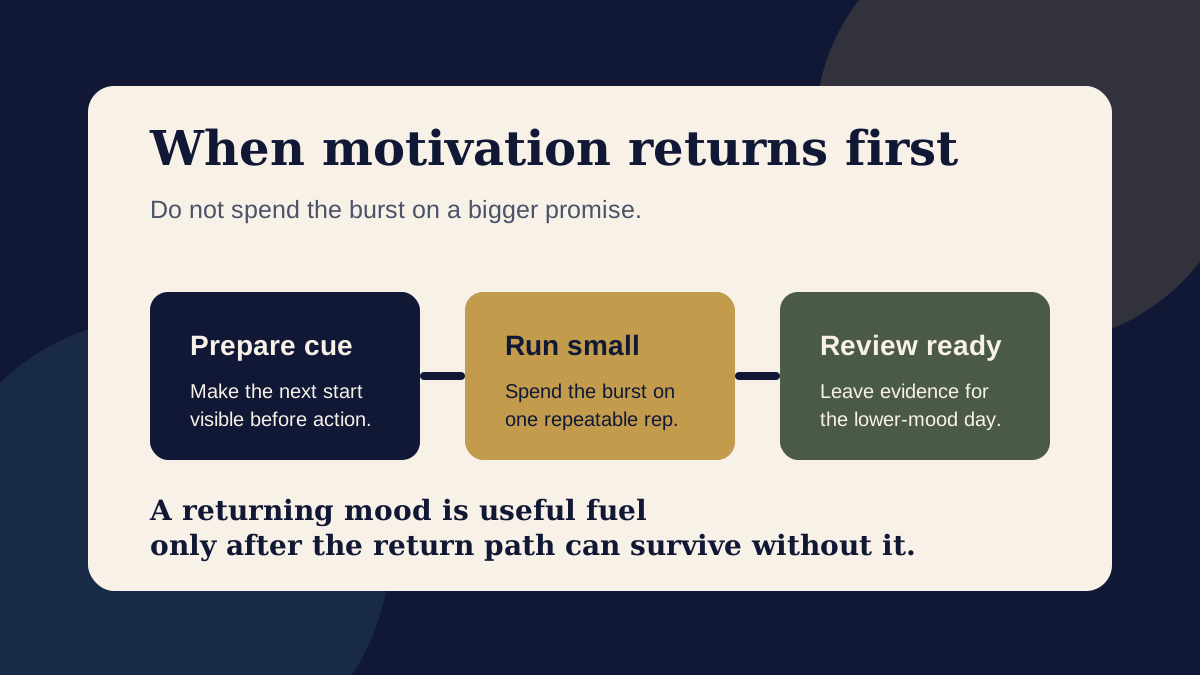
- Prepare cue
- Make tomorrow's start visible before the current burst disappears.
- Run small
- Choose one rep small enough to repeat without the same emotional spike.
- Review ready
- Leave a short note that says what helped return happen.
The three-step motivation conversion.
- Prepare the cue before you expand the goal. Put the book, draft, shoes, checklist, or review note where the next start will happen.
- Run one small rep. Spend the burst on a repeatable action, not a pledge that requires tomorrow to feel like today.
- Record what made return possible. Write the cue, time, place, or reduced friction that helped. That is the part the system can reuse.
Why returned motivation can create a trap.
After a quiet stretch, the first good day feels like evidence that the whole self has changed. That is the risky moment. If you use it to promise a daily streak, rebuild the full calendar, or buy a new tool, the route still depends on a mood that has not been operationalized.
In Compounding Momentum, the better question is not "How much can I promise while I feel ready?" It is "What can I install while I feel ready so the next return is easier?"
Practical examples
What counts as spending motivation well?
- Reading: read one section, then leave the next page open with a note about where to restart.
- Writing: draft one paragraph, then write the next prompt at the top of the file.
- Exercise: complete the short session, then place the next-session cue before you shower.
- Planning: choose tomorrow's first rep, not an entire new identity system.
- Recovery: name the condition that made return possible so it can be repeated on purpose.
Connect returned motivation to the right layer.
If the system has gone quiet, read restart when the system goes quiet. If the next action still feels too large, read when self-discipline feels too heavy. If the room keeps making the old path easier, read environment design for self-discipline.
Use this script
The two-minute returned-motivation script.
Use this before the good mood becomes a promise the lower-mood day cannot keep.
- The reusable cue is...
- Name the visible signal that can invite the next rep without a speech.
- The repeatable rep is...
- Choose a version small enough to do when the mood is ordinary.
- The review note is...
- Write one sentence about what made return easier today.
When the workbook helps.
A single motivated day may only need the conversion above. A repeated burst-and-collapse pattern needs a practice surface. The Companion Workbook helps when motivation keeps returning as a mood but not yet as a stable cue, rep, and review loop.
If you are still naming the pattern, start with Chapter 1 and the Seven-Layer Audit. Diagnose what the returned energy is trying to repair before you scale it.
Take the smallest useful next step.
If motivation has returned, choose one route that turns the burst into infrastructure before it becomes another reset promise.