Restart when the system goes quiet.
Answer first: when a habit system goes quiet, do not rebuild your whole life. Restore the smallest signal that tells the next action where to begin.
Quick answer
What should you do when a habit system goes quiet?
Restore one signal before rebuilding the plan. Find the cue, feedback point, or review that stopped speaking, put it back in the path, and run one small rep.
A quiet system is usually not asking for a dramatic reset. It is asking for a visible return path.
Signal loss
Quiet often means the system stopped giving you feedback.
The plan may still be valid, but the signal disappeared. The book was moved. The review was skipped. The tracker stopped showing progress. The next action no longer appears in the calendar.
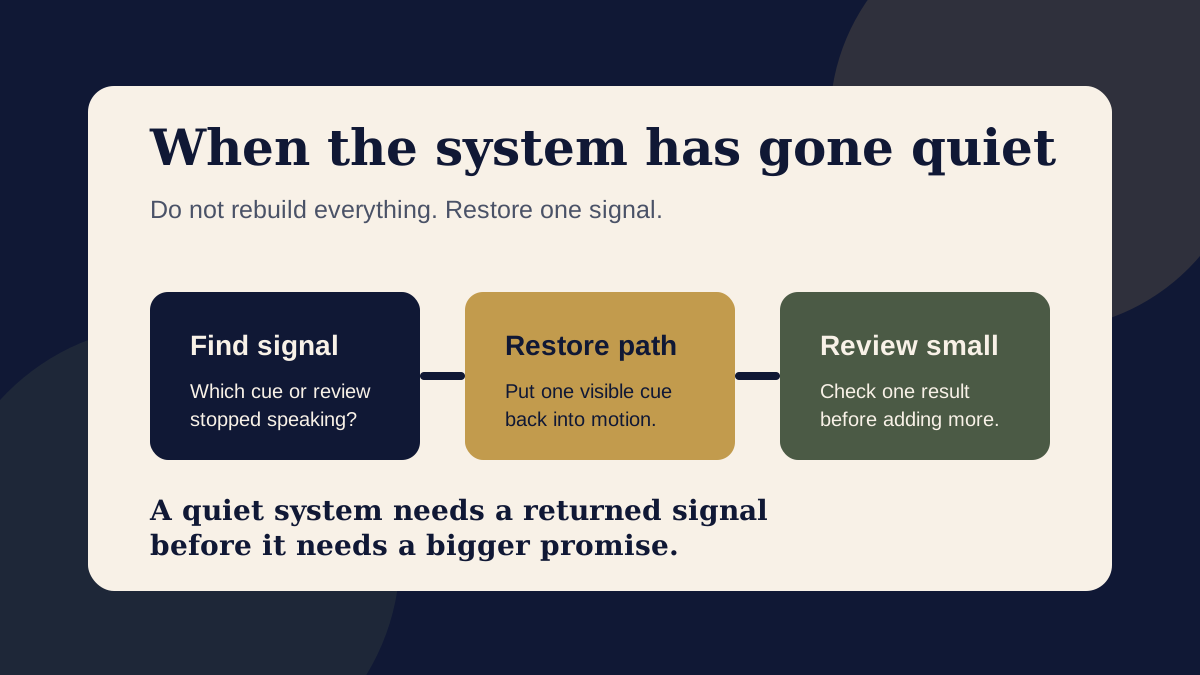
- Find signal
- Which cue, visible result, or review used to keep the route alive?
- Restore path
- Put one cue back where the next action naturally happens.
- Review small
- Check one result before adding more rules, tools, or promises.
The three-step quiet-system restart.
- Find the signal that disappeared. Look for the missing cue, unclear next action, absent review, hidden materials, or delayed feedback.
- Restore one path. Put the book on the desk, the shoes by the door, the draft in the first browser tab, or the review note on tomorrow's calendar.
- Run one rep and review it. Do the smallest useful action, then ask what made return easier or harder. Keep the answer visible.
Why a quiet system feels different from a failed habit.
A failed habit often feels loud: guilt, negotiation, avoidance, or a dramatic reset promise. A quiet system feels subtler. You stop noticing the route. The useful action is still reasonable, but nothing in the environment, calendar, or feedback loop is calling you back.
In Compounding Momentum, that means the repair belongs to the system layer, not the self-judgment layer. If the signal is gone, motivation has nothing concrete to answer.
Practical examples
What counts as restoring one signal?
- Reading: leave the book open to the next page instead of closed on a shelf.
- Writing: place the next sentence prompt at the top of the draft.
- Exercise: put the shoes where the morning path crosses them.
- Planning: add a five-minute review block before the week starts making decisions for you.
- Recovery: mark the last completed rep so return starts from evidence, not memory.
Connect quietness to the right layer.
If the quietness comes from too many live choices, read decision fatigue is not a self-discipline problem. If the action feels too large to restart, read when self-discipline feels too heavy. If the old room keeps swallowing the cue, read environment design for self-discipline.
Use this script
The two-minute quiet-system script.
Use this before you open a new app, buy another planner, or redesign the whole routine.
- The missing signal is...
- Name the cue, review, or feedback point that stopped pulling the route forward.
- I will restore it by...
- Move one object, schedule one review, or write one next-action prompt.
- I will know it worked when...
- Define the smallest visible result from today's return rep.
When the workbook helps.
A single quiet week may only need the restart above. A repeated quiet-system pattern needs a practice surface. The Companion Workbook helps when the same cue keeps disappearing, the same review keeps getting skipped, or progress keeps becoming invisible.
If you are still naming the pattern, start with Chapter 1 and the Seven-Layer Audit. Diagnose the signal before designing a larger system.
Take the smallest useful next step.
If the system has gone quiet, choose one route that restores a signal before you ask for more intensity.