When self-discipline feels too heavy.
Answer first: heaviness is not a command to quit or a demand to prove yourself. It is a signal to lower the entry cost until the useful route can reopen.
Quick answer
What should you do when self-discipline feels too heavy?
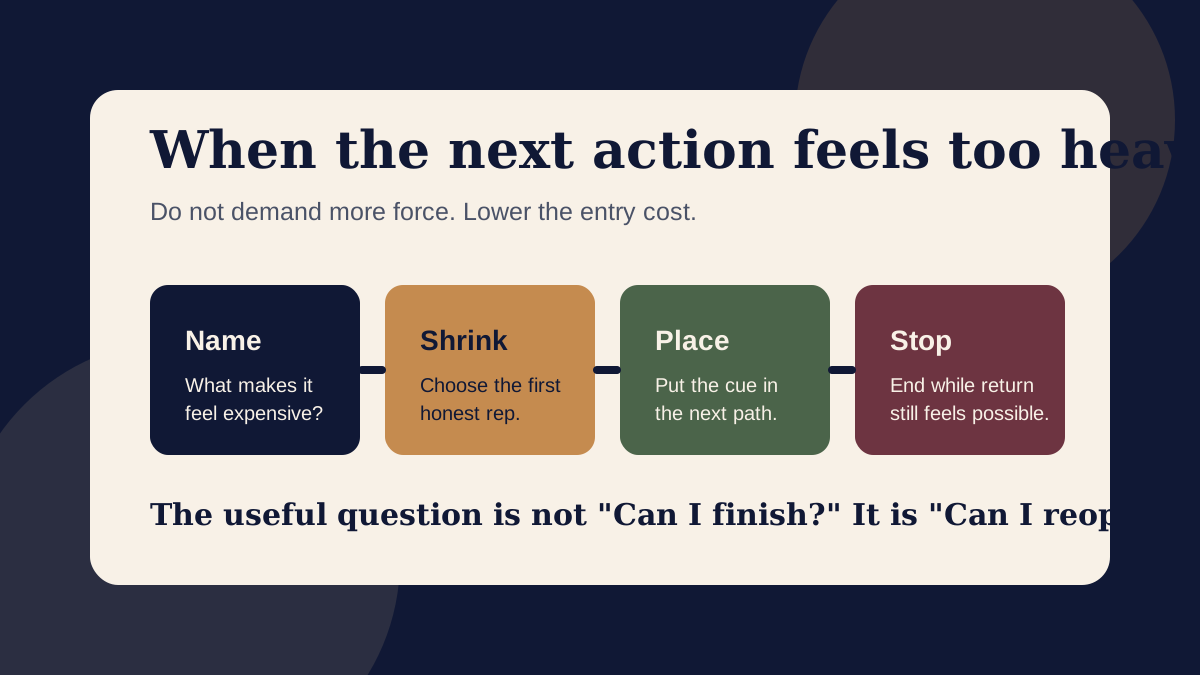
Lower the entry cost. Name what makes the action expensive, shrink the first rep, place the cue where the next version of you will see it, and stop while return still feels possible.
The goal is not to finish the whole task from a cold start. The goal is to reopen the route without turning recovery into punishment.
Entry cost
Heavy often means the first step is carrying too much.
A task can feel heavy because it has unclear edges, too many choices, emotional residue, a messy setup, or a hidden expectation that the next rep must be impressive.
- Name the weight
- Is the cost time, energy, emotion, ambiguity, environment, or fear of a bad result?
- Cut the doorway
- Choose a version small enough to begin before the mood changes.
- End cleanly
- Stop with the next cue visible so return is easier than avoidance.
The four-step heavy-action reset.
- Name the specific weight. "I have no discipline" is too vague. "I do not know where to start" or "the setup is messy" gives you a real repair.
- Shrink the first rep. Make the next action smaller than your pride wants: open the file, write one sentence, read one page, walk ten minutes, clear one surface.
- Place the cue in the path. Put the book, shoes, draft, note, or tool where tomorrow's tired version of you will meet it without searching.
- Stop before you create debt. A small clean rep beats a heroic restart that makes the next return heavier.
Why force is the wrong first repair.
Force can work for a single push. It is a poor architecture for repeated return. If every useful action requires a speech, a threat, or a dramatic identity promise, the system is too expensive to run.
In Compounding Momentum, the useful question is layer-specific: which part of the operating system made the action feel costly? Decision load needs fewer choices. Environment friction needs a changed setup. Emotional weight needs a smaller honest rep. Weak feedback needs a visible review.
Practical examples
What counts as a small enough rep?
- Writing: open the draft and write the next bad sentence.
- Reading: read one page and leave the book open for the next session.
- Exercise: put on shoes and walk for ten minutes without negotiating the full workout.
- Planning: choose tomorrow's first task instead of rebuilding the calendar.
- Recovery: clear one cue, then stop before the repair becomes a new project.
Connect heaviness to the right layer.
If the heaviness comes from too many live options, read decision fatigue is not a self-discipline problem. If it comes after a broken week, read self-discipline after a disrupted week. If the old setup keeps winning, read environment design for self-discipline.
Use this script
The two-minute heavy-action script.
Use this before you demand a whole performance from a system that only needs one reopened route.
- This feels heavy because...
- Name the real cost instead of turning it into a character verdict.
- The first honest rep is...
- Choose the smallest action that still belongs to the useful route.
- I will make return easier by...
- Leave one cue visible before you stop.
When the workbook helps.
A single heavy action may only need the reset above. A repeated heavy-action pattern needs a practice surface. The Companion Workbook helps when the same layer keeps adding weight and you need a weekly way to reduce friction before the next rep arrives.
If you are still naming the pattern, start with Chapter 1 and the Seven-Layer Audit. Diagnose the layer before demanding a stronger mood.
Take the smallest useful next step.
If the next action feels too heavy, choose one route that lowers the entry cost before you ask for more intensity.