Self-discipline after a disrupted week.
Answer first: do not rebuild the whole plan after a chaotic week. Reopen the smallest useful route, repair one weak layer, and let the next rep prove the system is still alive.
Quick answer
How do you rebuild self-discipline after a disrupted week?
Rebuild by refusing to make the week a referendum on your character. Name what actually disrupted the practice, choose the layer that made returning expensive, and do one recovery version before expanding the plan.
The first win is not a perfect week. The first win is proof that interruption does not own the system.
Return path
A disrupted week needs a narrow repair, not a dramatic reset.
When work, travel, illness, family pressure, or emotional load breaks the schedule, the old mistake is trying to restore everything at once. That turns recovery into another high-friction project.
- Name the break
- Was the disruption about time, energy, environment, emotion, social field, or feedback?
- Pick one restart cue
- Choose the first visible action that makes the next useful behavior easier.
- Protect the next rep
- Remove one live choice before the moment arrives.
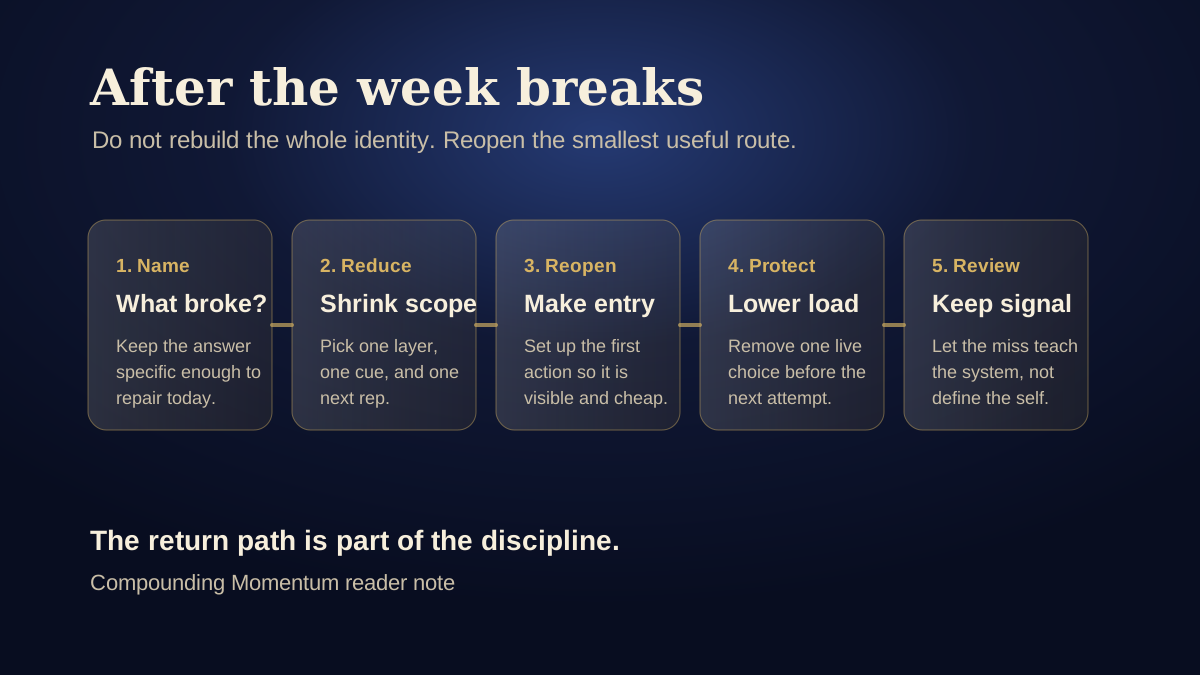
The five-step return path.
- Name the specific disruption. "The week was busy" is too broad. "Two late nights removed the morning cue" gives you something to repair.
- Reduce the scope. Do not restart the whole stack. Pick one layer and one behavior that can reopen momentum.
- Reopen the first cue. Put the book on the desk, write the first task, set out the shoes, clear the surface, or schedule the first ten minutes.
- Protect the tired version of you. Decide the fallback before the next busy day arrives. A recovery version counts when it keeps the route alive.
- Review before expanding. After one or two reps, ask what made return easier. Keep that condition before adding difficulty.
Why the first habit back should be boring.
After disruption, the tempting habit is the impressive one. You want the long workout, the perfect writing block, the clean calendar, or the complete plan. Those can wait.
The first habit back should lower friction for the next useful action. Sleep timing, the first work cue, a walk, a short planning review, a prepared meal, or a cleared workspace often matters more than the visible achievement.
This is not lowering standards. It is rebuilding the surface that standards need.
Practical examples
What should you restart first?
- If sleep broke: set tonight's shutdown cue before redesigning tomorrow.
- If work broke: write the first task and remove one open choice from the morning.
- If exercise broke: do ten minutes that preserves the route, not a punishment session.
- If reading broke: leave the book open and read one page before checking progress.
- If planning broke: run a five-minute review instead of rebuilding the whole calendar.
Use the seven layers to avoid blame.
In Compounding Momentum, disruption is treated as a system signal. If the week broke because the environment changed, the fix is different from a week that broke because the emotional load spiked or the calendar lost its first cue.
If one missed rep is turning into a full reset, read habit recovery without starting over. If the week broke under too many small choices, read decision fatigue is not a self-discipline problem. If your room or phone made the old loop cheaper, read environment design for self-discipline.
Use this script
The two-minute disrupted-week script.
Use this before the reset impulse gets theatrical. Keep the repair narrow enough to perform today.
- The week broke when...
- Name the exact pressure, interruption, or missing cue.
- The layer to repair is...
- Choose one layer so the fix has a clear target.
- The next honest rep is...
- Pick the smallest version that still keeps the identity route open.
When the workbook helps.
A single disrupted week may only need the return path above. A repeated disruption pattern needs a practice surface. The Companion Workbook helps when the same layer keeps breaking and you need weekly prompts, visible adjustments, and a way to track what actually worked.
If you cannot yet name the weak layer, start with the free chapter and Seven-Layer Audit. The point is to diagnose before you demand more force from the same unstable system.
Take the smallest useful next step.
If this week broke the system, choose one recovery route before changing the whole plan.