Tiny reviews compound self-discipline.
Answer first: a five-minute review turns a missed rep into feedback. Without that review, the miss usually becomes identity evidence, and the next reset gets bigger than the habit.
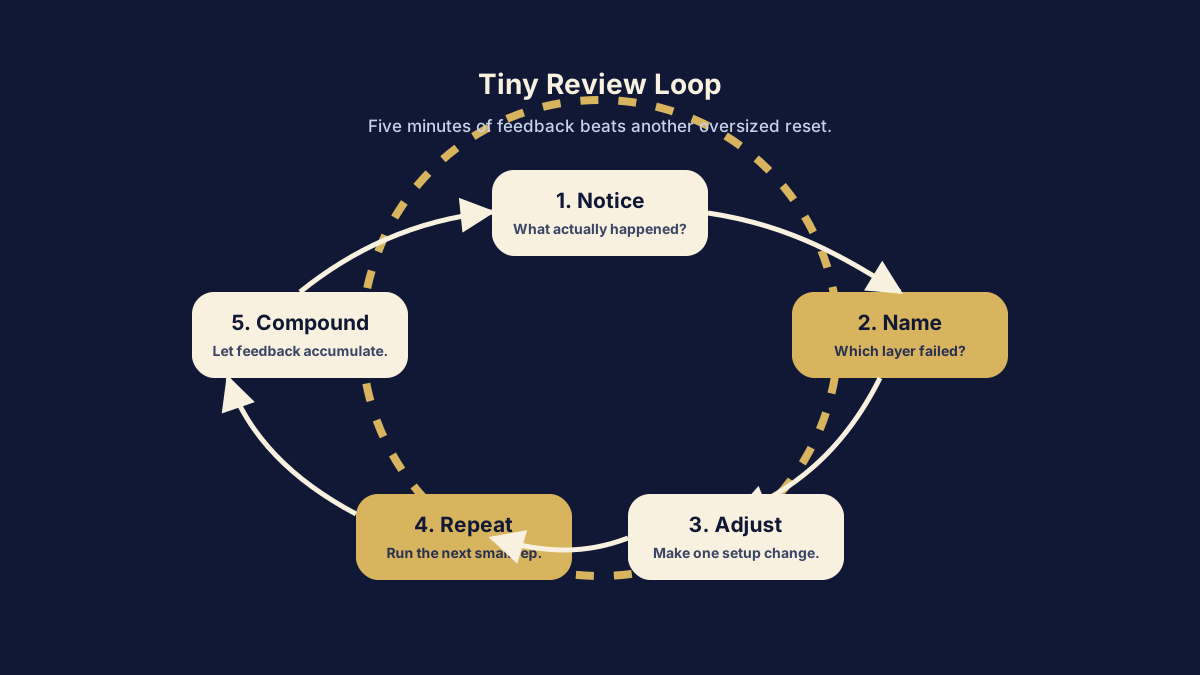
Quick answer
How do tiny reviews improve self-discipline?
They keep the system honest. A tiny review asks what happened, which layer failed, and what small setup change would make the next rep easier. It replaces shame with information.
The review is not a performance tribunal. It is a maintenance habit for the habit.
The five-minute review loop.
- Notice: write down what actually happened, not the dramatic story about what it means.
- Name: identify the layer: identity, emotion, environment, energy, time, social field, or feedback.
- Adjust: make one small change to the setup, cue, time, tool, or recovery rule.
- Repeat: run the next rep without redesigning the entire plan.
- Compound: let the feedback accumulate until the useful behavior has a stable surface.
Why big resets are seductive.
Big resets feel serious. They create the emotional relief of starting again. But they often hide the information you needed: the exact point where the system broke.
If Monday failed because the first task was unclear, a new identity statement will not help. If the evening habit failed because dinner ran late, a stricter calendar will not help. If the environment kept pulling you into the old loop, more motivation will not help.
A tiny review keeps the failure small enough to inspect.
Weekly prompt
Ask these four questions before changing the plan.
Keep the review short enough to repeat. The goal is one adjustment, not a life audit.
- Where did the loop break?
- Name the moment, not the mood.
- Which layer carried the failure?
- Environment, energy, time, feedback, identity, emotion, or social field.
- What is the smallest setup change?
- Move the cue, lower the friction, or shrink the recovery version.
Use reviews to protect momentum.
Momentum is not the absence of missed days. Momentum is the ability to return without turning the miss into a new identity. A five-minute review protects that return path.
That is why the review belongs beside the workbook. The book gives the map. The workbook gives the surface. The review keeps the practice from drifting back into all-or-nothing thinking.
Take the smallest useful next step.
Run the review on one behavior this week. If you cannot name the weak layer, start with Chapter 1 and the Seven-Layer Audit before buying anything.